Vitamin C Serum with Hyaluronic Acid: A Guide to One of the Most Effective Anti-Aging Skincare Combinations
 admin
admin 
Vitamin C and hyaluronic acid are two of the most clinically supported ingredients in contemporary skincare. This guide looks at what they actually do, how to use them together, and what to look for when buying a serum that combines them.
Vitamin C serums with hyaluronic acid have become one of the most widely used categories in the modern skincare market. The combination is popular for good reason — both ingredients have substantial clinical evidence behind them, they work well together, and they address different aspects of skin health that most people want to improve. This guide is for anyone considering adding a Vitamin C serum to their routine, or trying to evaluate the many competing products on the market.
What Vitamin C does for skin
Vitamin C — ascorbic acid, in its chemically active form — is a potent antioxidant that plays several important roles when applied topically to skin.
First, Vitamin C neutralises free radicals — unstable molecules produced by UV exposure, air pollution, cigarette smoke and normal metabolic processes that damage skin cells and accelerate visible aging. By scavenging these free radicals before they can inflict damage, topical Vitamin C reduces one of the major drivers of premature skin aging.
Second, Vitamin C is essential for collagen synthesis. Collagen is the structural protein that gives skin its firmness and resilience, and collagen production declines with age. Topical Vitamin C has been shown in clinical studies to support collagen production in the dermis, which over time can contribute to firmer, smoother skin.
Third, Vitamin C inhibits the production of melanin, the pigment responsible for dark spots and uneven skin tone. Regular use of a Vitamin C serum can gradually fade sun spots, post-inflammatory hyperpigmentation, and general dullness, leaving skin looking brighter and more even.
The concentration of Vitamin C in a serum matters. Most studies showing clinical benefit used concentrations between 10% and 20% L-ascorbic acid, with 15–20% being a common sweet spot for efficacy without significantly increased irritation. Products with very low concentrations (below 5%) are unlikely to produce meaningful results.
What hyaluronic acid does
Hyaluronic acid (HA) is a molecule that occurs naturally in skin and connective tissue, where it acts as a kind of water-binding cushion between cells. Applied topically, HA draws moisture into the upper layers of skin, giving the appearance of plumpness and reducing the visibility of fine lines caused by dehydration.
Unlike Vitamin C, HA does not have the same depth of evidence for long-term skin structural benefits, but its hydration effects are immediate and visible. Skin treated with a well-formulated HA serum typically looks fuller, smoother and more luminous within minutes of application, and the effect is cumulative with consistent use.
HA comes in different molecular weights, which matters for formulation. High-molecular-weight HA sits on the surface of the skin and holds water in the upper stratum corneum. Low-molecular-weight HA is small enough to penetrate slightly deeper, providing hydration below the surface. Serious serums often use multiple molecular weights to hydrate at different skin depths simultaneously.
Why the combination works well
Vitamin C and hyaluronic acid are complementary rather than overlapping. Vitamin C addresses long-term skin health — antioxidant protection, collagen support, pigmentation — while hyaluronic acid addresses immediate hydration and plumpness. Using them together means a single serum can deliver both streams of benefit, and the combination is also practical: HA helps buffer some of the potential irritation that higher Vitamin C concentrations can cause in sensitive skin, and the hydrating effect of HA helps the Vitamin C distribute evenly across the face.
The combination has also made its way into dermatologist-recommended skincare routines for exactly these reasons. Many professional-grade serums (from brands like SkinCeuticals, Paula’s Choice, and various established medical skincare lines) include both ingredients in their most popular products.
What to look for in a Vitamin C serum with HA
When evaluating products in this category, several formulation details matter significantly:
Concentration of Vitamin C. Look for 15% to 20% L-ascorbic acid for maximum efficacy. Lower concentrations may still provide some benefit but will work more slowly and less dramatically. Higher concentrations are more likely to cause irritation without proportionally greater benefits.
Form of Vitamin C. L-ascorbic acid is the most extensively studied and clinically validated form. Other forms — sodium ascorbyl phosphate, magnesium ascorbyl phosphate, ascorbyl glucoside, tetrahexyldecyl ascorbate, 3-O-ethyl ascorbic acid — have less robust clinical evidence but are more stable and less irritating. L-ascorbic acid is the default choice for maximum effect; other forms are suitable for sensitive skin.
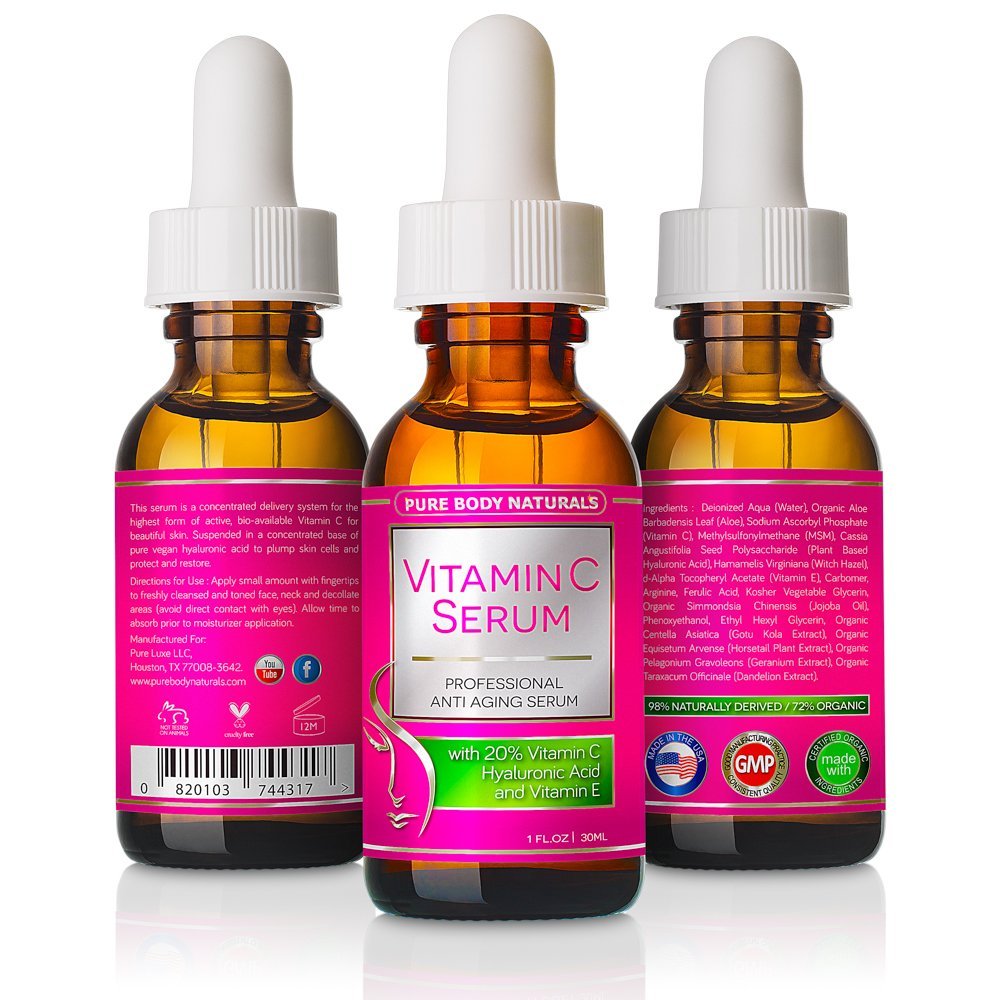
Packaging. Vitamin C degrades rapidly on exposure to light, air and heat. A well-formulated serum is packaged in dark glass (amber or cobalt blue) with an airless pump or a dropper, and it should not be sold in clear bottles. Stability is one of the most important quality indicators in this category.
pH and supporting antioxidants. L-ascorbic acid is most effective at a pH between 2.5 and 3.5. Formulations that include Vitamin E (tocopherol) and ferulic acid as co-antioxidants are generally more stable and more effective than Vitamin C alone. The “gold standard” combination in clinical dermatology is 15% L-ascorbic acid + 1% Vitamin E + 0.5% ferulic acid, famously used in SkinCeuticals C E Ferulic.
Hyaluronic acid type. A good HA blend uses multiple molecular weights for multi-depth hydration. Products that specify low-molecular-weight HA or that include sodium hyaluronate (a slightly smaller molecule) typically produce better hydration results than serums using only a single HA type.
Absence of irritating additives. Avoid serums with heavy fragrance, essential oils at high concentration, or excessive actives stacked together. Vitamin C alone is enough for most routines; adding multiple additional actives often increases irritation without significantly adding benefit.
How to use a Vitamin C serum with HA
The standard routine for a Vitamin C + HA serum:
- Cleanse the face and pat dry.
- Apply toner if it’s part of your routine. Wait until the toner has absorbed.
- Apply 3–5 drops of serum to the face, neck and décolletage. Smooth evenly across the skin without rubbing vigorously. Allow the serum to absorb for a minute or two.
- Follow with a moisturiser, and (if it’s morning) a broad-spectrum sunscreen.
Vitamin C can be used once or twice daily. Many dermatologists recommend applying it in the morning, where its antioxidant properties amplify sunscreen’s UV protection. Some users find it also works well at night as part of a repair-focused routine. Starting with once-daily use and monitoring for irritation is sensible, especially with higher concentrations.
Sunscreen is essential when using any Vitamin C routine. Vitamin C works alongside SPF rather than replacing it, and while Vitamin C does provide some photoprotection, it should not be used as a substitute for actual sunscreen. The practical reality is that a Vitamin C serum without daily SPF will deliver significantly reduced results — the free radical damage the serum is fighting continues unimpeded without sun protection.
What to expect and over what timeframe
Realistic expectations for a Vitamin C + HA serum routine:
- Immediate (minutes to hours): Hydration and plumpness from the HA. Skin looks slightly brighter and more luminous.
- Short-term (2–4 weeks): More even skin tone. Some fading of minor dark spots or post-inflammatory marks.
- Medium-term (8–12 weeks): Visible improvement in overall brightness. Reduction in sun damage signs. Skin texture may feel smoother.
- Long-term (3–6 months and beyond): Cumulative benefits including firmer skin from collagen support, significantly improved tone, and reduced appearance of fine lines.
Patience matters with Vitamin C. It is not a “results in a week” ingredient, and the serums that promise dramatic overnight results are usually overselling. Consistent use over months produces the best outcomes.
Sensitive skin and irritation
Some users find Vitamin C serums irritating, particularly at 15–20% concentrations. Signs of irritation include redness, tingling, stinging or flaking. If this happens:
- Reduce application frequency (every other day rather than daily).
- Apply after moisturiser rather than before, which reduces penetration slightly.
- Consider a lower concentration (10% instead of 20%) or a gentler Vitamin C form (magnesium ascorbyl phosphate rather than L-ascorbic acid).
- Stop use and consult a dermatologist if irritation is severe or persistent.
Storage and stability
Vitamin C serums are noticeably sensitive to environmental conditions. An opened bottle will typically remain at peak effectiveness for three to six months if stored correctly. Signs of degradation include:
- Darkening of the liquid (amber to deeper orange or brown suggests oxidation).
- Reduced or lost efficacy.
- Changes in scent or texture.
Store the bottle in a cool, dark location — not in a sunlit bathroom. Some users refrigerate their Vitamin C serum to extend its useful life. Always replace the cap or pump completely after each use to minimise air exposure.
Closing
A well-formulated Vitamin C serum with hyaluronic acid is one of the highest-value purchases available in contemporary skincare. The ingredient combination is clinically supported, the benefits are meaningful and cumulative, and the category offers options at every price point. For buyers evaluating specific products, the decision factors are concentration (15–20% L-ascorbic acid is the gold standard), formulation quality (supporting antioxidants, sensible pH, stable packaging), and compatibility with your skin type. Used consistently and paired with daily sunscreen, the Vitamin C + HA routine delivers one of the more reliable long-term results available from topical skincare.