 DealNest
 “A remarkable and assertive writing. Indisputable, devastating and distinguished leather.” — Jean-Claude Ellena
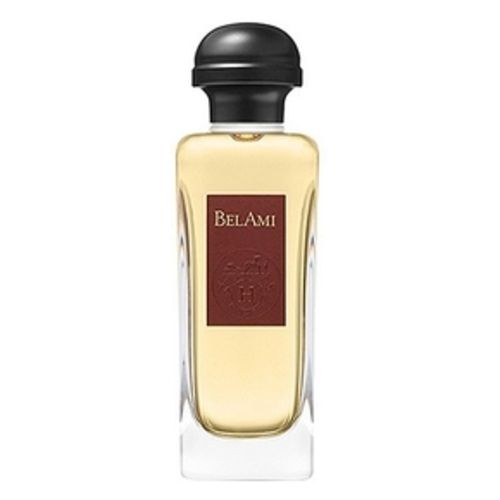
Some fragrances announce themselves politely and some walk in like they own the room. Bel Ami, the 1986 leather chypre by Hermès, belongs firmly to the second camp. Composed by Jean-Louis Sieuzac and named for Guy de Maupassant’s 1885 novel of the same name, it is a fragrance that never pretended to be quiet — and yet, decades later, it has acquired a kind of hush that only survivors earn. This is an in-depth look at what Bel Ami is, where it comes from, how it smells today, and why it still matters to anyone who takes Hermès men’s perfumery seriously.
A literary name
Maupassant’s Bel-Ami, published in 1885, follows Georges Duroy — a former cavalry soldier who arrives in Paris with no money and very little conscience and proceeds to seduce his way up through journalism and society. The nickname, given to him by the daughter of one of his conquests, sticks because Duroy is exactly that: a handsome friend, beautiful to look at and dangerous to trust. The novel is as much a portrait of Parisian ambition and Third Republic decadence as it is a character study, and Maupassant sharpens every sentence with the detachment of a writer who has watched the machinery of power from close range.
Choosing that title for a fragrance is not a neutral decision. Hermès is a house that tends to dress its perfumes in softer literary clothing — ideas of journeys, gardens, evening light. Bel Ami is different. It is a name with edges. It signals, deliberately, that the fragrance inside the bottle is not going to apologise for itself. And in 1986, when men’s perfumery was leaning into bolder and often louder leather chypres, that honesty about the register was itself a point of taste.
The composition: Sieuzac, 1986
Jean-Louis Sieuzac, the perfumer Hermès commissioned for Bel Ami, was a prolific author of that era’s masculine perfumery whose sensibility was formed when fragrances could afford to be dense, structured and a little theatrical. Bel Ami reflects that sensibility. Built on the bones of a classical chypre — the bergamot-oakmoss-labdanum skeleton that has underwritten so much of twentieth-century perfumery since Coty’s 1917 Chypre — it overlays a generously detailed leather accord and lets the two hold each other in balance.
The leather note in Bel Ami is not the austere birch-tar leather of an outdoor fragrance, nor the sweet suede of more modern compositions. It is closer to the smell of a leather-bound book in a warm library: pliable, a little sweet from the castoreum and styrax, faintly animal in the deep base. Carnation and patchouli do the structural work in the heart, giving the fragrance a spicy, resinous mid-section that bridges the bright citrus opening and the shadowed drydown. This is a fragrance that was composed, in the old sense of the word — every note earns its place.
It is worth saying, too, that 1986 itself was a particular moment for men’s perfumery. The mid-1980s were some of the last years in which a new mainstream men’s fragrance could confidently be built around castoreum, oakmoss and leather at full strength. Later restrictions on oakmoss levels, changing consumer tastes, and the eventual ascendancy of fresher, cleaner compositions all contributed to thinning out that register across subsequent decades. Bel Ami, in its original form, is a document of how Hermès chose to do leather when leather was still an aesthetic choice rather than a nostalgia move.
Olfactory profile
- Family: Woody — Chypre (leather accent)
- Top notes: Clary sage, Lemon, Mandarin, Petitgrain
- Heart notes: Carnation, Patchouli, Basil, Iris
- Base notes: Castoreum, Vanilla, Vetiver, Styrax
- Perfumer: Jean-Louis Sieuzac
- Year: 1986
- For: Men
How it wears
On skin, Bel Ami unfolds in three fairly clear chapters, and the trajectory tells you a lot about the intent of the composition.
The opening is bright but never bouncy. Clary sage gives the citrus a herbaceous edge, lemon and mandarin sketch the light, and petitgrain pulls everything back toward the earthier register that the heart will develop. This first ten or fifteen minutes is the most animated the fragrance ever gets, and it is also the part that readers of later, fresher men’s perfumery may recognise least. It is sharp, spare and un-sweetened — a Paris morning, not a holiday.
The heart is where Bel Ami earns its reputation. Carnation, basil and patchouli arrive together in a dense spicy-green chord that immediately signals the 1980s lineage, and iris provides a cool, powdered counterweight that keeps the whole thing from going too far into the warm. This is the phase where most wearers will either fall for the fragrance or decide it is not for them. It is assertive. It announces its style.
The base is the long tail the opening and heart have been leading toward — castoreum, vanilla, vetiver and styrax blurring together into a quiet, resinous leather that sits close to the skin and lingers for hours. This is the hush that comes after the theatricality; the fragrance’s most honest moment. In a well-kept vintage bottle, the drydown can feel almost hypnotic. In a modern reformulation, it is a little lighter, a little less mossy, but the skeleton is still recognisable.
Who it’s for
Bel Ami is not a beginner’s fragrance, and it was not designed as one. It rewards a certain kind of wearer — someone who reads, who cares about context, who understands that a scent is a piece of rhetoric about the person wearing it. If a fragrance, for you, is a signature rather than a mood, Bel Ami will reward the investment.
It suits the formal register better than the casual one: dark knitwear, tailored coats, evenings rather than afternoons. In summer it can feel heavy; in cooler weather it comes alive. For anyone considering Bel Ami as a first Hermès men’s fragrance, it helps to know what you are buying — a proud, leather-forward chypre with a literary name and a point of view. For anyone considering Bel Ami as a fifteenth or twentieth fragrance, you already know why you are here.
A good sillage test: wear Bel Ami to a conversation in a quiet room and watch whether the person you are speaking to leans in. That lean is the fragrance’s real measure. Classical chypres are not supposed to shout; they are supposed to invite.
Where it sits in the Hermès men’s line
Bel Ami is part of a lineage. The thread that connects it to the rest of Hermès men’s perfumery is, above all, the leather and saddlery DNA — the fact that Hermès was a harness-maker long before it was a fashion house, and that its masculine fragrances have always returned, in one form or another, to the smell of worked hide.
If you are exploring that lineage, three fragrances are worth reading alongside Bel Ami:
- Bel Ami Vetiver — the later flanker, drier and more linear than the original, for wearers who want the leather shape without the density. It keeps the silhouette of Bel Ami but takes the volume down.
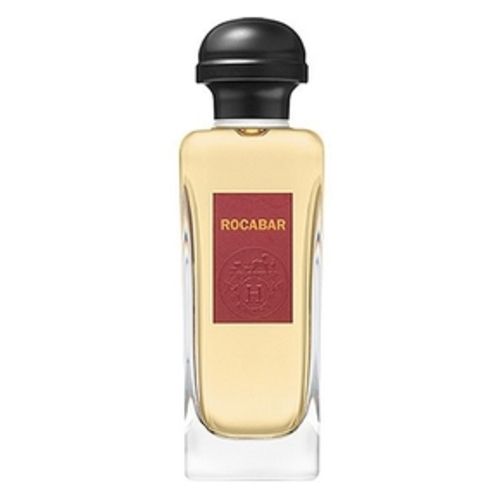
- Rocabar — Gilles Romey’s 1998 woody-spicy fragrance inspired by the Hermès horse blanket. Different family, same saddlery DNA, and a useful contrast: Rocabar reaches for the outdoors where Bel Ami sits indoors.
- Galop d’Hermès — the more recent leather entry, a brighter and rose-inflected leather where Bel Ami is castoreum and patchouli and a darker one. Reading the two together tells you how Hermès’s conception of leather has shifted in the intervening decades.
Reading further afield, Terre d’Hermès shares none of Bel Ami’s leather register but it does share the house’s commitment to a single clear idea carried through an entire composition. And Eau d’Hermès, Edmond Roudnitska’s 1951 debut for the house, is where the leather thread in Hermès men’s perfumery begins; Bel Ami is one of its most direct descendants.
A note on vintage versus reformulation
Any chypre that survives from the 1980s into a reformulated present has a version story, and Bel Ami is no exception. The original composition, made before the steep regulatory reductions in permitted oakmoss content, has a richer, more mossy foundation than the current formulation. The modern bottle is lighter in the base and slightly sweeter in the middle, but it still carries the Sieuzac shape unmistakably. If you have access to a well-kept vintage bottle, it is worth the detour; if not, the modern version is a perfectly honest reading of the same idea.
Closing
Bel Ami is the kind of fragrance that teaches you, slowly, what you like about perfume. It does not reveal itself on the first wear. It asks for a second, a third, a cool evening, a particular shirt. It rewards patience and it rewards attention. Forty years after Sieuzac composed it, and nearly a century and a half after Maupassant gave the nickname to his ambitious journalist, the fragrance and the novel still shake hands across the bottle. That is the rarest thing in commercial perfumery — a product that has earned the name it borrowed.