 DealNest
 “Inspired by the smell of undergrowth wet with morning dew.” — Hermès on Eau d’Orange Verte
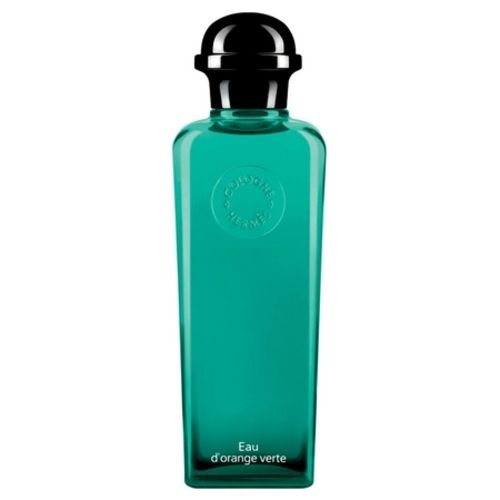
Eau d’Orange Verte — originally launched in 1979 as Eau de Cologne Hermès and renamed in 1998 — is Françoise Caron’s classic mint-inflected citrus cologne for the house, and it is the fragrance that effectively founded the Hermès cologne line as we know it today. The composition is a brief that Hermès famously asked several perfumers to submit (including, by the account that has since entered fragrance lore, a young Jean-Claude Ellena, who did not win the commission) and it has served, for more than four decades, as the house’s definitive reading of what a modern eau de cologne can be. This is a long look at the fragrance, its composition, its place in Hermès history, and who it still suits today.
The 1970s cologne moment
By the late 1970s, mainstream perfumery had been dominated for a decade by dense, patchouli-forward compositions — the oriental-chypre maximalism that defined much of the post-1968 luxury market. Eau de cologne, as a category, was regarded by many in the industry as old-fashioned: a product for older wearers, for hot weather, for the bathroom rather than the dressing table. Houses that wanted to take cologne seriously had to re-argue the case for why it deserved shelf space next to the serious perfumes of the era.
Hermès made that argument by commissioning, as the house tells it, several perfumers to submit a proposal for a cologne that would not try to “hold” — a fragrance comfortable being bright, short-form and sparkling rather than dense. The winning submission came from Françoise Caron, who would later be recognised as one of the significant French perfumers of her generation. Her composition was citrus-led, with an unusual crushed-mint effect and a fruity blackcurrant bud note, and it had a clarity the other submissions reportedly lacked. It was one of her first major fragrances. Hermès launched it in 1979 as Eau de Cologne Hermès.
Nearly twenty years later, in 1998, the house renamed the fragrance Eau d’Orange Verte — a more poetic, commercially distinctive name — without altering the composition itself. The fragrance has continued to sell under that name ever since.
Caron’s composition
Françoise Caron’s own description of her winning submission is worth quoting: “I then made a very readable proposal, very citrus, but with a small effect of crumpled mint that the others probably did not have, and this note of blackcurrant bud, this fruity touch that is very active.” Those three moves — a clear citrus, a crumpled mint, and a blackcurrant bud — still account for much of what makes Eau d’Orange Verte recognisable on first spray today.
The citrus is the scaffold. Mandarin, lemon, petitgrain and orange together give the fragrance its initial burst, in a chord that a wearer familiar with Mediterranean colognes will recognise immediately. But the cologne is not a simple citrus. The crumpled mint gives it an unusual cool, green edge — as if the citrus had been picked with a fistful of mint leaves and those leaves had been rubbed between the hands — and the blackcurrant bud adds a deep, slightly resinous fruity quality that keeps the fragrance from reading like yet another summer cologne.
At the heart, neroli blends with hedione — the synthetic jasmine-adjacent molecule that has become one of the backbone materials of modern perfumery — to add a soft, green-floral glow to the middle phase. The drydown, unusually for a cologne, has real persistence: oak moss and patchouli ground the composition and carry it into a woody, faintly sensual finish hours after the citrus has moved on.
Olfactory profile
- Family: Citrus — Aromatic Cologne
- Top notes: Mandarin, Lemon, Petitgrain, Orange, Crushed Mint
- Heart: Neroli, Hedione, Blackcurrant bud
- Base: Oak moss, Patchouli
- Perfumer: Françoise Caron
- Year: 1979 (renamed Eau d’Orange Verte in 1998)
- For: Unisex
How it wears
Eau d’Orange Verte opens with the classic eau-de-cologne lift, but the lift is quickly tempered by the mint and blackcurrant. A wearer who knows colognes will recognise the structure immediately — citrus peel, a bit of petitgrain’s slightly-bitter greenness, the expected burst of freshness — but the first fifteen minutes already include notes that are not in the standard cologne playbook. The crumpled mint is the element that signals this is not an ordinary cologne.
Through the middle hour, the heart takes over. Neroli opens up with its sunny orange-blossom quality and hedione brings in a soft green-jasmine transparency. The blackcurrant bud persists as a dark fruit whisper behind everything else. This is the phase that distinguishes Eau d’Orange Verte from generic citrus colognes; it has the dimensionality of a full composition, not just a freshener.
The drydown is the quiet surprise. Most colognes fade into nothing after two or three hours. Eau d’Orange Verte holds onto its base — oak moss and patchouli, softened but clearly present — for much longer. A generous application can still be detected on skin after five or six hours, and on fabric significantly longer. It is, in effect, a cologne with the longevity profile of a light eau de toilette, and that is part of why wearers buy the full bottle rather than just sample-sized editions.
Who it’s for
Eau d’Orange Verte suits almost anyone. It is perhaps the most genuinely unisex fragrance in the Hermès catalogue, and it works across most seasons and most settings. In summer it is at its freshest. In cooler weather it still holds its own, helped by the unusual depth of its base.
It suits wearers who like citrus fragrances but find pure citrus colognes too simple or too short-lived. It suits men who want an unambiguously unisex daily fragrance and women who want a fresh alternative to floral compositions. It is particularly good as a post-shower or post-sport fragrance — Hermès originally positioned the cologne with outdoor sporting joys in mind — and it performs well after a hot day, where fuller compositions can feel heavy.
For collectors, Eau d’Orange Verte is also worth owning as a historical document: a cleanly preserved example of late-1970s French cologne thinking, and the composition that set the template for Hermès’s subsequent cologne releases, many of which bear clear family resemblance.
The Hermès cologne collection
Eau d’Orange Verte was the origin point for what is now a substantial line of Hermès colognes, many of them composed by Jean-Claude Ellena during his years as in-house perfumer — the perfumer, as noted above, whose original submission to this very brief did not win, but who would later return and reshape the category within the house. That collection, often referred to as the Cologne Garden, includes, among others:
- Eau d’Orange Verte — reviewed here; the founder.
- Eau de Citron Noir — a later Ellena cologne centred on a dark-citrus black lime note.
- Eau de Néroli Doré (Golden Neroli Water) — neroli at its warmest, honey-inflected.
- Eau de Rhubarbe Écarlate (Scarlet Rhubarb Water) — a sharp, green-red rhubarb composition.
Reading the colognes together is a useful exercise. Eau d’Orange Verte is the wide-lens original; each of the later colognes takes one corner of the citrus-cologne idea and explores it in more depth. For wearers who love Eau d’Orange Verte, sampling the whole collection tends to produce at least two or three more bottles.
Where it sits in the wider Hermès line
Although Eau d’Orange Verte is a cologne rather than a serious perfume in the house’s technical sense, it occupies an outsized place in the Hermès identity. Alongside Eau d’Hermès (1951) and Terre d’Hermès (2006), Eau d’Orange Verte is one of the few fragrances that almost everyone who has owned one Hermès perfume has tried at some point. It is the fragrance the house sends as a welcome sample, the one used in its spa and hospitality partnerships, and — in the view of many industry observers — one of the clearest examples of the house taking a historically unfashionable category and making it a permanent part of its identity.
Closing
Françoise Caron’s Eau d’Orange Verte is the kind of fragrance that makes the case for cologne as a serious category rather than an afterthought. Released in 1979 and essentially unchanged since, it has the rare combination of freshness and depth that lets it work across wearers, seasons and decades. More than four decades on, it is still one of the cleanest compositions in the Hermès catalogue — a cologne that refuses to be simple, and a first major fragrance from a perfumer whose career would go on to shape a great deal of modern French perfumery.