
 DealNest
 An intimate rose met by a cool, polished leather — an equestrian tribute from Hermès in a stirrup-shaped bottle.
Galop d’Hermès, released in 2016, was Christine Nagel’s first major signature fragrance for the house, launched around the time she took over from Jean-Claude Ellena as sole in-house perfumer. It is a composition that almost announces itself through the silhouette of its bottle — a stirrup, rendered in glass and held in a metallic curve, tied with a strip of fine leather — before the wearer has even sprayed it. That theatricality is earned: Galop is one of the most distinctive leather-rose compositions in contemporary mainstream perfumery, and it is the clearest statement Nagel made early on about the direction Hermès perfume would take under her hand. This is an in-depth review.
The house’s saddlery DNA
To understand Galop you have to understand the thread that runs through almost everything Hermès makes. The house was founded in Paris in 1837 as a harness maker, and for its first decades its customers were almost entirely in the equestrian world. The leather goods followed the harness work, the silk scarves followed the leather goods, and the perfumes — when they finally arrived, with Edmond Roudnitska’s Eau d’Hermès in 1951 — inherited the same material vocabulary. Hide, stitching, oiled wood, horse, earth.
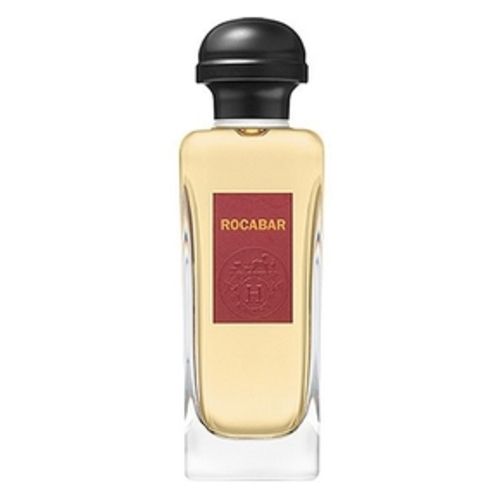
Many Hermès fragrances over the decades have returned, in one form or another, to that equestrian inheritance. Bel Ami (1986) is a dense leather chypre. Rocabar (1998) is inspired by a woven horse blanket. Calèche (1961) is named for a horse-drawn carriage. Galop is the most recent major addition to that lineage, and in some ways the most literal: the name means “gallop,” the bottle is a stirrup, the composition centres on leather, and the story written around it is explicitly about speed, motion and the rider.
Christine Nagel steps forward
When Nagel arrived at Hermès in the mid-2010s as the house’s next in-house perfumer, succeeding Ellena after a little over a decade of his quiet, minimalist aesthetic, the question around every new fragrance she composed was: how would her sensibility differ? The answer, in Galop, turned out to be: more material-forward, more sensual, less afraid of warmth. Where Ellena’s Hermès compositions tended toward dry air and transparent structure, Nagel’s early Hermès work leaned into the body of the fragrance — into tactile, held-together accords rather than sketched ones.
Galop is the clearest example of that shift. It is recognisably Hermès — restrained, considered, built around a single clear idea — but the idea it is built around is not the dry mineral landscape of Terre d’Hermès. It is a close-up: a flower pressed against a piece of leather and warmed by the hand holding it. The shift is subtle but, in context, deliberate.
The composition: rose meets leather
At the centre of Galop is a chord that perfumery has returned to for more than a century: rose over leather. The combination has historical precedent in the classical leather compositions of the early and mid-twentieth century, and Nagel’s treatment is a modern reading of it. The rose in Galop is not a candy rose or a dewy garden rose; it is a rose with some spicy heat to it, close in character to the dense roses Nagel has worked with elsewhere in her career. The leather is neither the heavy tar-leather of an 1980s masculine nor the suede of many contemporary compositions. It is a cool, bright, almost polished leather — new saddle rather than worn saddle.
Around that central rose-leather pairing, Galop uses a handful of quieter supporting notes: a touch of quince giving the opening a slightly fruity brightness, saffron adding warmth and a small suggestion of spice, and osmanthus threading a soft apricot-leather whisper through the mid-section and base. The whole composition is compact — it does not try to do too much — and it rewards a wearer who notices detail. It reads as unisex in the contemporary sense: nothing in it is gendered in the old heavy way, and it suits anyone who wears the idea of rose and leather well.
The stirrup bottle
Galop’s presentation deserves its own paragraph because the bottle is, unusually, part of the fragrance’s editorial statement. Designed as a horseman’s stirrup — glass held in a metal curve, with a leather tie at the top — it is a direct physical reference to Hermès’s saddlery. It is also refillable, which in 2016 was still relatively uncommon among mainstream prestige fragrances and which has since become a touchpoint of the house’s sustainability communication. Whether or not one cares about bottle design, the object on the dresser is doing editorial work: it is reminding the wearer which house made the fragrance and why.
Olfactory profile
- Family: Leather — Floral
- Opening: Quince, bright citrus facets
- Heart: Rose, Saffron
- Base: Leather, Osmanthus, Woody notes
- Perfumer: Christine Nagel
- Year: 2016
- Bottle: Stirrup-form glass, refillable
How it wears
On skin, Galop unfolds in three recognisable movements, but the transitions between them are unusually smooth — the kind of polish a composition acquires when its idea is small enough to feel of one piece.
The opening, ten to twenty minutes, sketches quince and a cool citrus edge. It is neither sweet nor sharp. It is a fragrance announcing that it will be a rose fragrance, but taking its time about it.
The heart is Galop’s best passage. Rose and saffron arrive together with the leather already audible beneath them, and for the next hour or two the composition holds that chord almost unchanged. This is the part of the fragrance wearers tend to come back to the bottle for. It is architectural without being cold, warm without being sweet. If you try Galop on a tester and do not get past the opening, you will miss what the fragrance is actually doing.
The base, over several hours and into the following day, is a quiet, woody leather, with osmanthus weaving through. It is longer-lasting than many contemporary mainstream fragrances in this register. On fabric it can sit for the best part of twenty-four hours.
Who it’s for
Galop suits a wearer who likes clarity in their fragrances — someone who would rather wear a single well-executed idea than a dense composite. It reads slightly formal but not stiff; it works for the office, the evening, and cool-weather afternoons. In high heat the fragrance can feel a little closer to the skin than ideal; it prefers autumn and winter, and it performs best indoors or in temperate conditions.
For anyone who has worn and liked rose-forward compositions elsewhere — classical leather-roses, contemporary Middle Eastern roses, the rose-oud intersection — Galop is worth trying as a European counterpoint: the same basic idea executed with Hermès restraint.
It is also a useful entry point into the broader Hermès leather family for a wearer who has found older leather chypres too heavy. Galop gives you the leather without the gravity.
Where it sits in the Hermès line
Galop is the modern leather Hermès, and it sits in direct conversation with several of its predecessors. Reading them together tells a small story about how the house has thought about leather over four decades:
- Bel Ami (1986) — a dense, castoreum-heavy leather chypre. The leather is dark, resinous, worn. This is the 1980s voice of Hermès leather.
- Rocabar (1998) — a woody-spicy fragrance with cypress signature, drawn from the horse blanket of the saddlery. Less directly about leather as a note, more about the whole saddlery environment.
- Bel Ami Vetiver — the later, greener flanker to Bel Ami, lighter and more linear.
- Eau d’Hermès (1951) — the original leather thread in the maison’s perfumery, a citrus-spiced leather that seeded everything that came after.
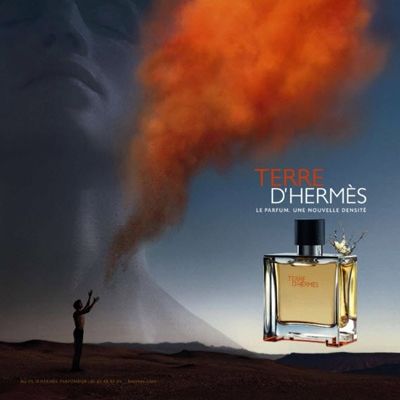
Galop sits alongside these but announces a new register: brighter leather, a rose-forward lens, and the refillable stirrup bottle as aesthetic statement. Reading laterally, Terre d’Hermès offers a useful contrast — mineral rather than leather, dry rather than warm, geological rather than equestrian. The two fragrances together show the two dominant poles of the contemporary Hermès men’s and unisex aesthetic.
Closing
Galop is not a loud fragrance and it does not try to be the most impressive thing in the room. It is, more than that, a signature piece — a fragrance designed for the kind of wearer who wants something specific, recognisable, and identifiably Hermès in every drop. Christine Nagel’s composition reads as confident without being showy, and the bottle reminds you, every time you pick it up, where this fragrance came from: a Parisian harness-maker’s workshop, 1837, and the two centuries of material sensibility that followed.