 DealNest
 “I see Hermès perfumes as jazz standards — the melodic line is immediately readable, but the orchestration can be transformed, modified, rewritten with great freedom.” — Jean-Claude Ellena
Bel Ami Vétiver, composed by Jean-Claude Ellena, is the contemporary reinterpretation of Jean-Louis Sieuzac’s 1986 Bel Ami — a leather-chypre flanker in which vetiver replaces the original’s patchouli and takes the composition into a drier, greener, more linear register. It is one of the cleaner examples of a flanker that is genuinely a new fragrance rather than a variation, and it sits alongside the original as a second reading of the same idea rather than a replacement for it. This is a long review.
A flanker as jazz standard
When Ellena took on the brief to extend Bel Ami, his framing was unusually honest. Hermès perfumes, he said, are like jazz standards — compositions with a recognisable melodic line that can be orchestrated in different ways without losing their essential shape. Bel Ami Vétiver is that orchestration principle at work. The bones of Sieuzac’s 1986 composition are preserved: a woody-chypre structure, a leather heart, a citrus-led opening, a mossy foundation. What changes is the instrument at the centre. The patchouli of the original, which did much of the composition’s structural work, steps aside for vetiver, which behaves differently on skin and pulls the fragrance toward a different mood.
The result is recognisably Bel Ami. A wearer familiar with the original will read the family resemblance immediately. But it is also unmistakably a different fragrance — quieter, greener, more modern, more linear in its progression. Ellena’s reading of the idea reflects his own signature: less dense than the 1986 composition, more transparent, with the weight carefully distributed rather than concentrated in a single phase.
Vetiver as the new centre
Vetiver is one of the most characterful materials in masculine perfumery. It is the grass-like root of a tropical plant cultivated mainly in Haiti, Java, and Réunion, and the oil distilled from those roots carries a distinctive profile: woody, smoky, earthy, slightly green, with a dry mineral edge. It has been used in men’s fragrances for decades — Guerlain Vétiver (1959) is one of the category’s defining classics — and it has the kind of structural weight that allows it to anchor a composition on its own, without needing additional support from heavier base materials.
In Bel Ami Vétiver, Ellena uses vetiver as the structural replacement for patchouli. Patchouli in the original Bel Ami contributed a warm, slightly sweet, resinous quality to the heart; vetiver contributes, by contrast, a drier, cooler, greener woodiness. The shift changes the fragrance’s temperature. The original Bel Ami feels warm; Bel Ami Vétiver feels cool. The original feels indoor; the flanker feels slightly more open-air.
The vetiver Ellena uses here is the warmer, woodier, faintly smoky side of the material rather than its earthier, more mineral side. This is an important distinction: vetiver can trend green and cool, or it can trend woody and warm. Bel Ami Vétiver leans toward the second reading, keeping the fragrance in conversation with the leather-chypre identity of the original rather than pulling it into drier or more austere territory.
The composition at large
Around the vetiver centre, Ellena preserved much of the Bel Ami vocabulary but simplified the architecture. The opening is a citrus-spice accord: lemon, orange and bergamot at the front, with a mixed spice chord behind them — cloves, cumin, cardamom and pepper — that echoes the warm middle of the 1986 composition. The opening feels more immediately vivid than the original’s more slow-starting burst, partly because Ellena’s citrus hand is lighter and partly because the spices are treated as a coherent chord rather than a procession of individual notes.
The heart is vetiver, reinforced by subtle powdery support — jasmine and iris add a delicate counterweight to keep the woody centre from reading too dry — and resinous materials (incense and a light balsamic presence) thread through to maintain continuity with the leather heart of the original. This is the phase in which Bel Ami Vétiver is most clearly its own fragrance. The leather is still audible, but it is cool leather rather than warm, and the vetiver is doing the real structural work.
The base is a woody-chypre foundation: cedar, oakmoss, a muted patchouli, and a quiet leather. The oakmoss is essential for the chypre reading, and its presence — even at the reduced levels that modern regulation allows — keeps the fragrance firmly in the Bel Ami family rather than in the more transparent territory of Ellena’s other men’s work.
Olfactory profile
- Family: Woody — Chypre (vetiver-centred)
- Top notes: Lemon, Orange, Bergamot; Cloves, Cumin, Cardamom, Pepper
- Heart: Vetiver, with Jasmine, Iris, Incense accents
- Base: Cedar, Oakmoss, Patchouli, Leather
- Perfumer: Jean-Claude Ellena
- For: Men
How it wears
Bel Ami Vétiver opens with a familiar Hermès brightness — lemon and orange and bergamot arriving together, sharper than the original Bel Ami’s opening — underpinned by a warm spicy chord. This phase reads distinctively Ellena; it is cleaner, more immediate, less heavy than the original Bel Ami’s opening, and it suggests a fragrance that has been edited down rather than built up.
Within the first thirty minutes, the vetiver emerges. Its arrival is gentle rather than dramatic — the citrus and spices move slowly into the background and the vetiver settles into place underneath them. This is the phase that most clearly distinguishes the flanker from the original: the green, woody, faintly smoky quality of the vetiver is the fragrance’s defining character, and it holds that position for most of the wearing time.
Through the middle hours, the iris and jasmine add a quiet powdered-floral dimension that softens the vetiver without competing with it. Incense threads through the heart and supports the vetiver’s smoky side. The fragrance reads as one coherent idea rather than a series of phases.
The drydown is the oakmoss-cedar-leather base, quiet but persistent. Longevity is moderate to strong on skin; fabric holds the fragrance well into the following day. Projection is controlled rather than loud — a Bel Ami for a wearer who wants to be noticed up close rather than from across a room.
Who it’s for
Bel Ami Vétiver suits wearers who admired the original Bel Ami but found it too dense, too dark, or too tied to the 1980s register. It also suits wearers coming from other vetiver fragrances who want a leather-and-chypre reading of the material rather than a pure vetiver soliflore.
It is at its best in autumn, spring, and cooler weather. In summer the vetiver reads beautifully clean; in deep winter the original Bel Ami sometimes carries the heavier weight better. For office wear, Bel Ami Vétiver is the more appropriate of the two — it projects less and stays closer to the skin — while the original remains the better evening option for wearers who want weight.
For anyone building a Hermès men’s wardrobe, owning both Bel Ami and Bel Ami Vétiver is a reasonable proposition. They do not duplicate each other, and the two fragrances together give a full picture of how the house has thought about leather and vetiver across four decades.
The bottle
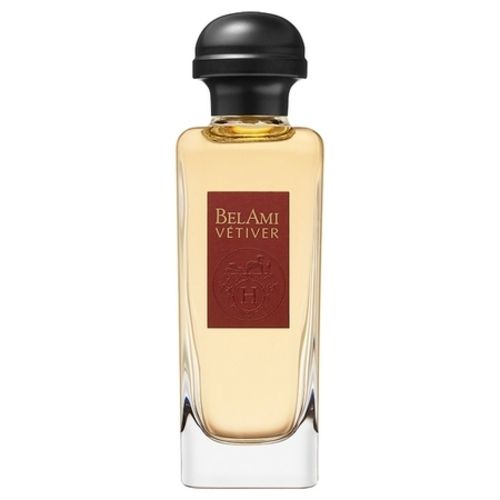
Bel Ami Vétiver is housed in the signature Hermès men’s bottle — a rectangular glass flask with a black cap — that the original Bel Ami shares. The flanker is distinguished visually by a mahogany-toned insert on which the name of the fragrance and the Hermès logo are displayed in relief. The overall presentation reads as a careful variation on the original Bel Ami bottle rather than as a new design, which is appropriate: the fragrance inside is a careful variation on the original composition rather than a new proposition.
Where it sits in the Hermès men’s line
Reading Bel Ami Vétiver against the other major Hermès men’s fragrances:
- Eau d’Hermès (1951, Roudnitska) — the citrus-leather origin.
- Bel Ami (1986, Sieuzac) — the dense 1980s leather chypre.
- Bel Ami Vétiver (Ellena) — reviewed here; the contemporary rewrite.
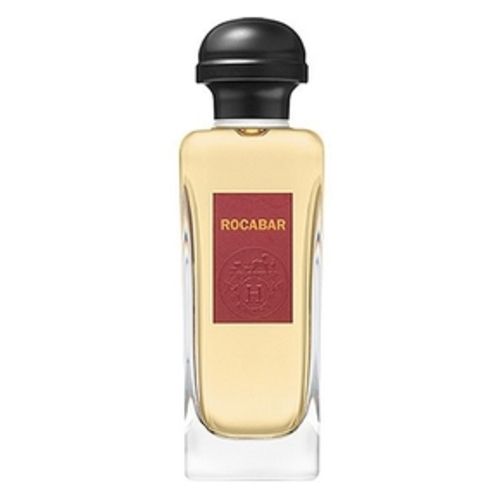
- Rocabar (1998, Romey) — the saddlery-inspired woody-spicy.
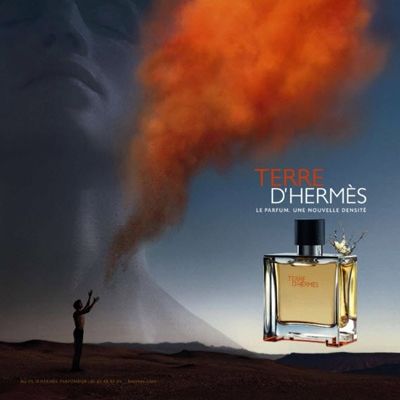
- Terre d’Hermès (2006, Ellena) — the mineral-woody flagship.
- Galop d’Hermès (2016, Nagel) — the rose-and-leather contemporary.
- H24 (2021, Nagel) — the sage-and-sclarene modern men’s.
Bel Ami Vétiver is the Ellena bridge between the old Hermès men’s register (Bel Ami, Rocabar) and the contemporary (Terre, H24). It respects the older leather tradition while refusing to simply repeat it, and it occupies the territory — a greener, drier, more open-air leather — that Galop would later explore from a different angle.
Among flankers in the Hermès catalogue, Bel Ami Vétiver is one of the more successful. Many flankers exist purely to extend a profitable name; Bel Ami Vétiver extends the Bel Ami idea into genuinely different territory without abandoning what made the original distinctive.
Closing
Bel Ami Vétiver is Jean-Claude Ellena’s respectful, confident rewrite of a thirty-year-old Hermès classic. By swapping patchouli for vetiver and simplifying the architecture, he made the original’s register portable into the twenty-first century — lighter, greener, more wearable across seasons and settings, but still recognisably the same jazz standard that Sieuzac first orchestrated in 1986. For wearers who want a leather-chypre that does not feel like a period costume, Bel Ami Vétiver is one of the better options in contemporary mainstream perfumery.