
 DealNest
 “I wanted to express the essence of femininity with flowers and nothing but flowers.” — Jean-Claude Ellena
Jour d’Hermès Absolu, released in 2014, is the second chapter in Jean-Claude Ellena’s Jour d’Hermès — an intensification of the original 2013 fragrance, built on the same floral vocabulary but turned up in concentration and deepened in body. Where the original Jour d’Hermès reads as dawn light, Absolu reads as the same light twenty minutes later, when the flowers have fully opened. This is a long look at what Absolu is, how it differs from the original Jour, and who it suits.
Hermès and the women’s register
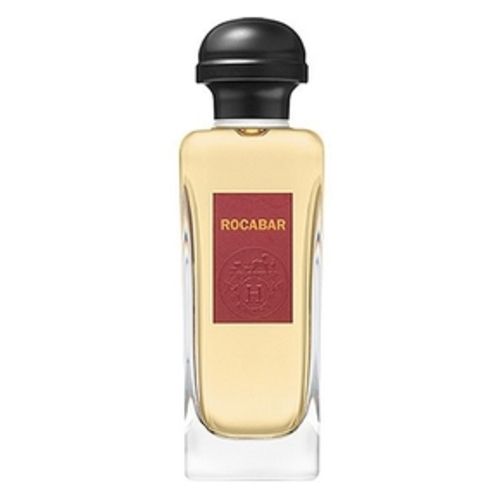
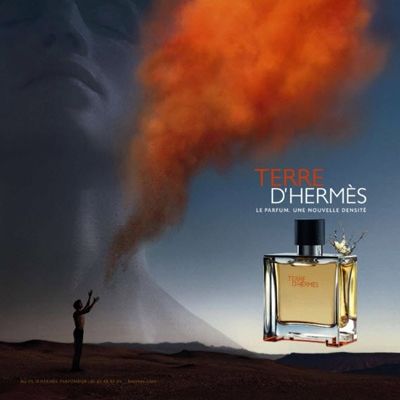
For most of its history, Hermès has been better known for its men’s fragrances than its women’s. The equestrian and leather heritage of the house — Eau d’Hermès (1951), Bel Ami (1986), Rocabar (1998), Terre d’Hermès (2006) — gave it a masculine identity that its women’s perfumery had to work around rather than with. Calèche (1961) was the first major women’s signature, and since then Hermès has approached women’s fragrance more cautiously than many other luxury houses: fewer launches, longer development, each composition asked to stand for something specific rather than contribute to a dense women’s catalogue.
Jour d’Hermès, released in 2013, was Ellena’s major contribution to that women’s line. It was his first women’s flagship for the house, and it was characteristic of his sensibility: dry, luminous, deliberately under-filled, built around light rather than heat. A year later, Absolu arrived as the deeper reading of the same idea.
From Jour to Absolu
The relationship between Jour d’Hermès and Jour d’Hermès Absolu is unusually clear for a flanker: Absolu is not a variation on the same theme, it is the same theme at full concentration. Ellena kept the 100% floral premise — the idea he described as “the essence of femininity with flowers and nothing but flowers” — but shifted the proportions. The original Jour is airier; Absolu is denser. The original suggests flowers in morning air; Absolu is the flower in the hand.
Practically, for a wearer who has smelled both, three differences stand out. First, Absolu has much more weight in the heart — gardenia and sambac jasmine carry a creamy, almost edible quality that the original keeps quieter. Second, the drydown is warmer, thanks to honey and apricot blossom, which come through more prominently in Absolu than in the original. Third, Absolu lasts longer on skin and projects a little further. It is the evening version of the fragrance. The original remains the daytime version.
Ellena’s floral thinking
Jean-Claude Ellena’s approach to floral composition has always been architectural rather than maximalist. His flowers tend not to be literal — he is not trying to replicate the exact smell of a gardenia in a garden. He is after the idea of the flower, its sense-memory, the element of it that a wearer will recognise even if a botanist would not. In Absolu, that architectural instinct is the reason the fragrance reads as genuinely floral rather than sweet. The gardenia is not the oily, banana-tinged gardenia of some compositions; it is the photograph of a gardenia, its outline in scent. The jasmine sambac is warm but not heady. The apricot blossom threads a soft fruity line through the drydown without ever becoming candied.
For wearers used to louder modern florals, Absolu can at first feel restrained. Give it an hour on skin and that restraint becomes the point. The fragrance is not trying to be obvious. It is trying to be beautiful.
Olfactory profile
- Family: Floral
- Top note: Gardenia
- Heart: Sambac jasmine
- Base: Apricot blossom, Honey
- Also woven through: Rose, lily
- Perfumer: Jean-Claude Ellena
- Year: 2014
- For: Women (wears softly unisex)
How it wears
Absolu is a floral that behaves with unusual discipline. It does not rocket out of the bottle, and it does not fade quickly; it simply arrives, holds, and deepens.
The opening is creamy rather than bright. Gardenia leads — fresh and slightly green at the edges — and sambac jasmine follows within minutes. There is no aldehyde sparkle, no citrus. The fragrance starts as what it will continue to be.
The heart is where Absolu shows the quality of its composition. Jasmine sambac and rose sit over gardenia, and a soft honey note begins to thread through the middle hour. The effect is warm without being heavy — closer to skin than to the air in a florist’s shop. This is the phase in which a wearer who was unsure about the opening usually finds themselves returning to smell their own wrist.
The drydown, over several hours, is the apricot blossom and honey foundation: a quiet, slightly skin-like floral that lingers close to the body for much of the evening. On fabric, Absolu can still be detected the following morning. It is not a fragrance that shouts, but it is also not a fragrance that leaves early.
Who it’s for
Jour d’Hermès Absolu suits a wearer who likes florals but dislikes loudness — someone who would rather wear a fragrance that rewards closeness than one that announces itself from a distance. It is the kind of fragrance a wearer may keep on the dressing table for years rather than tire of; it does not have a single attention-grabbing hook, which is exactly why it holds up on long acquaintance.
It works in almost every season, but it is at its best in spring and early summer, and in cool evenings where the gardenia reads most cleanly. In heat it can feel fuller than the original Jour d’Hermès; in cold weather the honey and apricot base give it real warmth.
For anyone moving from the original Jour d’Hermès to Absolu, the decision is essentially about volume. If you loved the original but wished it lasted longer, Absolu is the answer. If you loved the original because of its lightness, the original is still where you want to be.
Where it sits in the Hermès women’s line
Hermès’s women’s line is smaller and more deliberate than the men’s. Reading Absolu against the other major women’s fragrances in the house:
- Calèche (1961) — the first major Hermès women’s fragrance. Aldehyde-floral, classical, the opening chapter of the women’s story at the house.
- 24 Faubourg (1995) — the big 1990s Hermès women’s, sunny and floral-oriental, named for the house’s flagship address.
- Jour d’Hermès Gardenia — the later flanker focused more specifically on the gardenia idea.
- Twilly d’Hermès (2017) — Christine Nagel’s first major women’s signature after taking over from Ellena; more extroverted, sweeter, younger in register.
Absolu sits between Calèche and Twilly chronologically and stylistically. It is more modern than Calèche and less extroverted than Twilly; it is in many ways the most characteristically Ellena Hermès women’s fragrance in the portfolio, and it is the one that most clearly bears his signature.
The bottle
The Absolu bottle is a heavier reading of the original Jour d’Hermès design: an imposing glass mass on a square base, topped with a rounded, fluid-looking stopper. The juice inside is a warm flesh-pink, a deliberate contrast to the cooler golden tone of the original. Available in 30ml, 50ml and 85ml eau de parfum, Absolu is slightly more substantial-feeling in the hand than the original — a nice bit of physical signalling for a fragrance that is, in every sense, the heavier reading of the same idea.
Closing
Jour d’Hermès Absolu is Ellena’s floral composition in its fuller body. It is neither the easy gift-shop floral nor the aggressive contemporary floral; it is something more specific — a composition that trusts its wearer to sit with flowers for an afternoon and notice how they change. A decade after its release, Absolu still reads as one of the clearest examples of Ellena’s women’s perfumery, and one of the most honest arguments in the Hermès catalogue for what restraint can do when it is paired with real material quality.