
 DealNest
 “Flowers, the absolute symbol of femininity.” — Jean-Claude Ellena
Jour d’Hermès, released in 2013, was Jean-Claude Ellena’s first major women’s signature as Hermès’s in-house perfumer — a fragrance he spent roughly three years developing, built entirely on flowers, with every chypre and woody register deliberately excluded as “too masculine” for the composition he wanted. It is a rare example of a mainstream women’s perfumery launch that prioritises restraint over drama, and it has aged well precisely because it did not chase any of the trends of its moment. This is a long look at what Jour is, how Ellena built it, and who it continues to suit more than a decade after its release.
Ellena’s brief
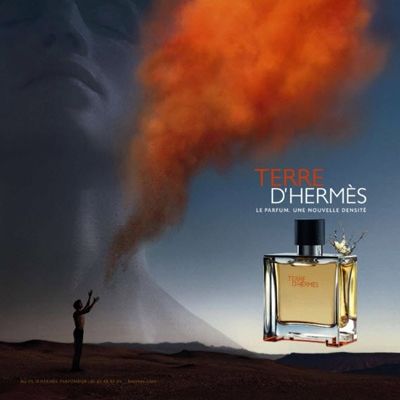
By the time Ellena turned his attention to a major women’s launch for Hermès, he had been the house’s first and only in-house perfumer for almost a decade. His men’s work had defined the house’s contemporary masculine register — above all Terre d’Hermès (2006) — and expectations for his first women’s flagship were high and, inevitably, mixed. Some in the industry expected a feminine counterpart to Terre. Some expected the kind of fruity-floral Hermès had largely avoided. Ellena, characteristically, delivered neither. He took three years to compose Jour d’Hermès because he wanted to solve a specific problem: how to write a fragrance that was unambiguously feminine without falling into any of the sentimental clichés the category had accumulated.
His answer was to commit to flowers and only flowers. No chypre base, no woody drydown, no heavy orientalism, no gourmand sweetness. He described the intended feeling as “tenderness” — a quiet, held-close, almost introverted fragrance for a wearer who did not want to announce herself from the other end of the room.
The composition: flowers, flowers and more flowers
Jour d’Hermès is a composition in which no single floral note dominates. Ellena kept the olfactory pyramid deliberately under-described — he preferred, in interviews around the launch, to tell wearers to smell the fragrance and feel it rather than to pick it apart by ingredient. The publicly acknowledged core is a bouquet built around gardenia and sweet pea, complemented by what Ellena described as a mix of “living room flowers, garden flowers and wild flowers” — a phrase that does more to describe the mood than the formula.
What comes through on skin is the architecture rather than any individual note. The gardenia is present but not waxy; the sweet pea is discernible but not candied. The fragrance reads less as “floral” in the bouquet sense and more as “floral” in the atmospheric sense — the air in a room where flowers are, rather than the flowers themselves.
Ellena has always been open about the fact that he reaches for modern synthetics as readily as for naturals. With Jour, he used synthetic materials to smooth the transitions between floral notes and to achieve the light, airy quality the fragrance is built around. The result is a composition that could not have been made with naturals alone, and it is better for it. The flowers are recognisable but abstracted — the sketch of a bouquet rather than the bouquet itself.
A fragrance against obviousness
What makes Jour d’Hermès unusual for its price range and release era is what it is not. It is not sugary. It is not heavy. It is not a fruity-floral, a gourmand, or an oriental. It is not designed to dominate a conversation. For a wearer coming from loud contemporary florals, Jour can feel almost understated — and that understatement is exactly the point. Ellena intended a fragrance that wearers would come back to over years, not one they would love for a summer and tire of.
In interviews after the launch, Ellena said that some women had told him they wore his fragrances to sleep, and he took that as the highest compliment a perfumer could receive. That is the kind of fragrance Jour is: one a wearer keeps close, rather than one a wearer performs with.
Olfactory profile
- Family: Floral (100% floral by Ellena’s design)
- Publicly disclosed notes: Gardenia, Sweet pea
- Atmosphere: A mix of “living room flowers, garden flowers and wild flowers”
- Perfumer: Jean-Claude Ellena
- Year: 2013
- Development time: Approximately three years
- For: Women (wears comfortably unisex)
How it wears
Jour is an unusually smooth fragrance on skin. It does not have a dramatic opening, a long heart phase and a heavy base in the classical sense; it has a single coherent floral mood that shifts slightly in emphasis over several hours.
In the first twenty minutes, the bouquet is at its most active. Gardenia reads most clearly at the start — clean, slightly green, not at all tropical — and sweet pea threads a softer, slightly peppery floral line beneath it. There are no citrus top notes, no aldehydes. The fragrance begins in its own register and stays there.
Through the middle hours, the composition settles and warms slightly without ever becoming heavy. The fragrance sits close to the skin — projection is moderate at best — and the floral air quality remains consistent. A wearer who likes to notice small changes in how a fragrance evolves will find Jour rewarding for the very subtlety of its shifts. A wearer who wants dramatic development will find it less interesting.
The drydown is, characteristically, quiet. Jour does not end in a bold base; it ends in a soft-focus of what it has been all along. On fabric it can still be detected into the next morning, but on skin it tends to retreat into a very close aura by the end of the evening. It is a fragrance for the person next to you, not the person across the room.
Who it’s for
Jour d’Hermès suits a wearer who likes subtle fragrances — someone who finds loud perfumes exhausting and who prefers compliments at close range to sillage trails. It is the kind of fragrance that signals taste more clearly than signature; wearers will rarely have their Jour identified at a distance, but they will often have their fragrance described as “beautiful” in close conversation.
It works in almost every season and almost every setting. Office wear, daytime, spring and summer especially. In cold weather it can feel a little thinner than Jour d’Hermès Absolu, which is the fuller, warmer sibling and which most wearers end up owning alongside Jour rather than instead of it.
For anyone moving into the Ellena Hermès catalogue for the first time, Jour is one of the best entry points — it is a compact introduction to his women’s sensibility, and it pairs naturally with his men’s compositions for household use.
Where it sits in the Hermès women’s line
Jour d’Hermès opens a new chapter in the Hermès women’s catalogue. Reading it against the major women’s launches before and after:
- Calèche (1961) — the house’s first major women’s signature. Aldehyde-floral, classical, formal.
- 24 Faubourg (1995) — warmer, sunnier, a 1990s floral-oriental.
- Jour d’Hermès (2013) — the Ellena floral, dry and light, reviewed here.
- Jour d’Hermès Absolu (2014) — the fuller, warmer reading of the same idea.
- Jour d’Hermès Gardenia — the later flanker focused more narrowly on the gardenia note.
- Twilly d’Hermès (2017) — Christine Nagel’s first women’s signature at Hermès, more extroverted in register.
Jour sits at the quietest end of this line. Where Twilly is loud and Absolu is fuller, Jour is the sketch — the fragrance Ellena spent three years reducing until only the essential parts remained.
The bottle: Pierre Hardy’s first
Jour d’Hermès was housed in a bottle designed by Pierre Hardy — Hermès’s creative director for fine jewellery — and it was Hardy’s first perfume bottle. The design is quietly ambitious: a solid glass mass with a square base and softly rounded shoulders, in which the fragrance appears suspended in the centre of the object rather than merely contained by it. The name is engraved into the glass and is read in transparency. It is the kind of bottle that looks more impressive in the hand than in a photograph; it has weight and presence without obvious ornament. For wearers who value object design, the Jour bottle is one of the more successful Hermès presentations of its decade.
Closing
Jour d’Hermès is Ellena’s women’s composition at its most characteristic — a floral fragrance built around restraint, developed slowly, released without flourish, and rewarding to the wearer who treats it as a companion rather than a statement. More than a decade after its release, it still does the thing it was designed to do: hold its wearer close, stay its own quiet shape across a long day, and trust that anyone paying attention will recognise the quality. It is one of the cleaner arguments in recent mainstream perfumery for what patience in composition can achieve.