The Composition of Galop d’Hermès: Saffron, Rose and Leather in Christine Nagel’s Fragrance
 DealNest
 A closer look at the raw materials that make up Christine Nagel’s 2016 Galop d’Hermès — saffron, rose, leather and quince — and at why this particular combination works.
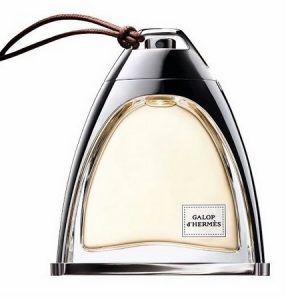
Galop d’Hermès is built, unusually for a mainstream luxury launch, around one of perfumery’s most expensive materials. Christine Nagel’s 2016 signature for the house — reviewed in detail in our main piece on Galop d’Hermès and examined in its bottle design in our piece on the stirrup flask — combines saffron, rose, leather and quince into a compact four-ingredient composition that reads more architectural than decorative. This piece focuses on those four materials: where they come from, why they were chosen, and how they work in the fragrance.
Saffron: red gold
Saffron is the thread that runs through almost every discussion of Galop’s composition, and for good reason. The spice is extracted from the stigmas of the Crocus sativus flower — three thin red threads per blossom — and the ratio of flower to spice is extreme. Estimates vary by region, but the generally accepted figures are in the neighbourhood of 150,000 flowers to produce a single kilogram of saffron. Every thread must be picked by hand, and the flowers themselves only bloom for a few weeks each autumn.
The result is one of the most expensive agricultural products on earth. Saffron from Iran, Kashmir and Spain (the three major producing regions) regularly commands prices in the tens of thousands of euros per kilogram, and premium grades can reach significantly higher. For a perfumery material, saffron is in a rarefied category alongside natural ambergris and certain rare oud oils in terms of material cost.
Putting saffron at the centre of a mainstream fragrance is therefore a commercial decision with real weight. Hermès’s willingness to do so in Galop is part of the fragrance’s identity — the material choice itself is a statement about how seriously the house takes the composition. It is also characteristic of how Hermès tends to work: the maison has a long-standing preference for using real, high-quality materials in generous quantities rather than leaning entirely on synthetic substitutes.
On skin, saffron in Galop reads as warm, slightly leathery, faintly bitter-honey, with a specific cultural weight. The material has been used for centuries in Middle Eastern, Persian and North African cooking and perfumery, and its scent carries echoes of all those traditions. In Galop, the saffron is used at a detectable-but-not-dominant concentration — enough to give the composition its distinctive middle register without overwhelming the rose.
Rose: the queen of flowers
The rose in Galop is the composition’s beating heart, and Nagel’s treatment of it is worth examining in detail. Rose has been one of the core materials of French perfumery since the earliest days of the discipline, and modern perfumery uses several different forms of the ingredient — rose absolute (extracted from petals with solvents), rose otto or attar (steam-distilled essential oil), and various natural and synthetic reconstructions that isolate specific facets of the flower.
Nagel’s rose in Galop is not a soft, dewy, garden rose. It is not a sugary candy rose. It is a rose with heat in it — slightly spicy, slightly dark, with the kind of resinous depth that distinguishes a serious perfumer’s rose from a cosmetic one. The saffron that sits alongside the rose in the composition amplifies this character; the two materials share enough tonal overlap that they read as a single chord rather than as separate notes.
In interviews around the fragrance’s launch, Nagel described the rose as carrying the “feminine and romantic facet” of the composition, but emphasised that her rose has thorns. This is a common perfumer’s metaphor, but in Galop it is structurally accurate: the rose is warmed by saffron, supported by leather, and given its visual presentation through a bottle that references equestrian craft — all of which keep the fragrance from ever reading as sweetly floral.
Leather: the house’s first material
The leather note in Galop is a modern reconstruction — an accord built from labdanum, styrax, castoreum substitutes and various synthetic materials that together evoke the smell of worked hide — and Nagel’s treatment of it is characteristic of the contemporary leather register in perfumery. It is not the heavy birch-tar leather of nineteenth-century Russian compositions, not the smoky dark leather of Bel Ami‘s 1986 register, and not the sweet suede of many contemporary releases. It is a cool, bright, slightly polished leather — new saddle rather than old saddle.
That reading matters because the leather in Galop is doing cultural and compositional work at once. Culturally, it is the reference to Hermès’s saddlery origin — the material from which the house was built, the craft that still operates in the house’s workshops at 24 Faubourg Saint-Honoré. Compositionally, it is the grounding element that keeps the rose and saffron from floating away. Without the leather, Galop would read as a serious floral-spicy composition. With the leather, it reads as identifiably Hermès.
The leather in Galop is also what makes the fragrance read as unisex on most wearers. A rose-and-saffron composition without leather tends to be gendered feminine in most wearing contexts; adding leather pulls the composition into a more genuinely neutral register. This is consistent with how Hermès has tended to approach gendered perfumery: the maison is comfortable labelling fragrances as “women’s” or “men’s” for marketing purposes, but its compositions themselves are frequently more ambiguous than the marketing suggests.
Quince: the unexpected fourth
The fourth major ingredient in Galop — less discussed but important to the fragrance’s opening — is quince. Quince is a member of the apple-pear family of fruits, bright and tart when raw, warm and honeyed when cooked. Perfumery uses quince as an unusual top note that does several jobs at once: it adds a fruity lift to a composition, it reads as slightly unfamiliar to Western noses (making the fragrance immediately distinctive), and it carries cultural resonance with Middle Eastern and Mediterranean traditions in which quince has long been eaten in both sweet and savoury preparations.
In Galop, the quince handles the first few minutes of the wear. It is the note that a wearer notices first — a bright, slightly tart, slightly honeyed fruit-floral quality — before the rose and saffron emerge and before the leather makes itself felt. The quince is not a dominant ingredient, but it sets the fragrance’s opening tone, and its presence keeps Galop from reading like a classical rose-leather composition at the top. Without the quince, Galop would feel more firmly within the historical register; with it, the fragrance reads modern.
Four ingredients, one architecture
Taken together, the four materials form a coherent architecture. Quince leads for the first few minutes. Rose and saffron emerge in the heart and hold the middle of the wear. Leather grounds the drydown and carries the fragrance into the following hours. Each ingredient does specific work; no ingredient is there for ornament.
This kind of compact, purposeful composition is characteristic of contemporary Hermès perfumery under both Ellena’s and Nagel’s tenures. The house tends to trust a small number of well-chosen materials to carry a fragrance rather than leaning on dense, multi-note pyramids. Twilly d’Hermès (three ingredients: ginger, tuberose, sandalwood), H24 (four ingredients: sage, narcissus, rosewood, sclarene), and Galop (four ingredients: quince, rose, saffron, leather) all operate on the same principle. The principle is not minimalism for its own sake; it is clarity, trusting the wearer to appreciate depth without being shouted at.
The architecture visible on skin
A wearer sampling Galop experiences the composition’s architecture directly. The opening is recognisably quince and light citrus. Within twenty minutes, the rose-saffron chord has taken over. Within an hour, the leather has emerged underneath. Within four hours, the fragrance has settled into a warm leather-rose base that carries it into the evening. This progression is quietly architectural — each phase gives way to the next without any single material being pushed aside abruptly, and each phase earns its place through the specific work its ingredients are doing.
That kind of wearing experience is what Hermès charges for. The materials are expensive; the perfumer is senior; the compositional decisions have been made slowly and with real taste. A wearer coming from a mass-market fragrance will notice the difference immediately — Galop behaves differently on skin than cheaper compositions, holds its structure longer, and produces richer transitions.
Closing
The composition of Galop d’Hermès is a small study in how contemporary luxury perfumery can work at its best. Saffron — one of the most expensive materials in the field — sits at the centre alongside a warm, spicy rose. Leather grounds the composition in Hermès’s own material heritage. Quince adds a small unfamiliar note at the top that keeps the whole fragrance from reading as a classical rose chypre. Christine Nagel’s architectural hand holds the four materials together without overcrowding them. For wearers who like to know what they are smelling, Galop is one of the more openly structured fragrances in the current Hermès catalogue, and one of the cleaner demonstrations of the maison’s compositional standards.