Hermès Terre d’Hermès Eau Intense Vétiver Review: Christine Nagel’s 2018 Green-Woody Flanker
 DealNest
 “Avoiding the pitfall of a vetiver that is too classic and aromatic, to carry the same freshness-warmth balance as Terre d’Hermès in a twenty-first-century register.” — on the fragrance’s compositional brief
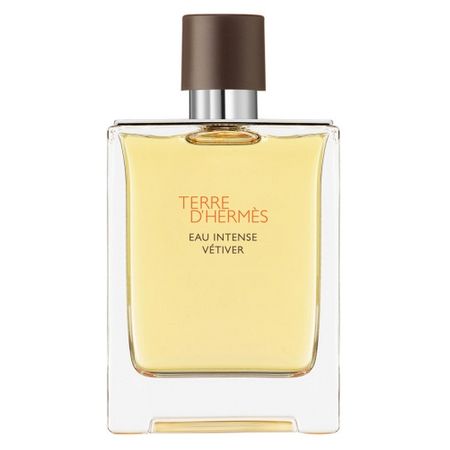
Terre d’Hermès Eau Intense Vétiver, released in 2018, is Christine Nagel’s first flanker to the Terre d’Hermès family — the first major Terre composition not by Jean-Claude Ellena, and the entry that opens the possibility of the line continuing in new directions under the new in-house perfumer. It is built around an overdosed vetiver heart, set within the grapefruit-flint-wood architecture that Ellena established in 2006, and it reads as a deliberate, respectful handoff between two generations of Hermès perfumery. This is a long review.
The Terre d’Hermès family and the Nagel transition
By the time Terre d’Hermès Eau Intense Vétiver appeared in 2018, the Terre line was already well-established. Jean-Claude Ellena’s original Eau de Toilette from 2006 had been extended in 2009 with the Parfum concentration — the fuller, denser reading of the original — and in 2014 with Eau Très Fraîche, a lighter, more citrus-forward summer flanker. Each of these was Ellena’s work, and each extended the mineral-woody landscape of the original without departing from its compositional grammar.
In 2016, Christine Nagel took over as sole in-house perfumer at Hermès after Ellena’s retirement. The question for the house — and for followers of the line — was what Nagel would do with the Ellena-era flagships. Would she leave Terre d’Hermès alone as Ellena’s legacy and focus on her own signatures? Or would she contribute to the line under its existing framework?
Eau Intense Vétiver answered that question. Nagel did not rewrite Terre d’Hermès; she extended it. The flanker preserves the original fragrance’s grapefruit-and-flint top and its woody drydown, and places an overdosed vetiver heart between them. The result is recognisably Terre d’Hermès — a wearer familiar with the original will identify the family within seconds — but it is also unmistakably a new composition, with vetiver carrying the work that mineral-flint carried in the 2006 flagship.
The vetiver at the centre
Vetiver is one of the great classical materials of masculine perfumery. The oil is distilled from the roots of a tropical grass, cultivated primarily in Haiti, Java and Réunion, and the natural material has a distinctive profile: grass-like, earthy, smoky, slightly green, faintly leathery, with a dry mineral undertone. Vetiver has anchored men’s fragrances for decades — Guerlain Vétiver (1959) is one of the category’s defining classics, and vetiver continues to appear in serious masculine compositions.
What distinguishes Nagel’s treatment of vetiver in Eau Intense Vétiver is the dose and the intent. The vetiver is not a supporting note here; it is the centre of the composition, used at a concentration that makes it immediately readable and sustained for much of the wearing time. The house itself described the fragrance’s vetiver as “not bringing woody freshness in the conventional sense, but rather its vegetal energy — almost as if we could feel the force of its leaves and sap in the heart.”
That’s a useful frame. Where most vetiver fragrances emphasise the smoky-woody side of the material, Eau Intense Vétiver emphasises its plant character — the growing, green, living quality of the grass itself rather than the distilled dry-wood result. Geranium, paired with vetiver in the heart, amplifies the green dimension and gives the composition a slightly leafy-herbal brightness that classical vetiver fragrances rarely reach.
The composition
The opening is consistent with the Terre d’Hermès family: grapefruit, bergamot and pink berries arrive together in a bright, slightly tart chord that is immediately identifiable. A wearer familiar with the 2006 original will recognise this opening within seconds — the grapefruit-flint-citrus signature is preserved without modification. Pink berries add a small lift that reads as more modern than the original, a detail that signals this is a flanker rather than a re-release.
Within twenty to thirty minutes the vetiver-and-geranium heart emerges and takes over. This is the phase that most clearly distinguishes Eau Intense Vétiver from the rest of the Terre line. The vetiver is present at unusual concentration — green, smoky, slightly herbal, with the geranium threading a cool floral-leaf edge through the composition. The mineral-flint register that defines the original Terre is audible but pulled back; the vetiver does much of the work the flint did in the 2006 version.
The base is the familiar Terre d’Hermès woody foundation: cedar, vetiver, patchouli and benzoin. This is the element that ties Eau Intense Vétiver back to the original line. A wearer six hours into the fragrance will recognise it as Terre d’Hermès unmistakably; the base is essentially unchanged from Ellena’s composition, which keeps the flanker within the family despite the significant shift in the heart phase.
Olfactory profile
- Family: Woody — Green (vetiver-centred)
- Top notes: Grapefruit, Bergamot, Pink berries
- Heart: Vetiver (overdosed), Geranium
- Base: Cedar, Vetiver, Patchouli, Benzoin
- Perfumer: Christine Nagel
- Year: 2018
- Concentration: Eau de Toilette
- For: Men
- Part of: Terre d’Hermès family
How it wears
Eau Intense Vétiver opens as Terre d’Hermès has always opened. A wearer sprays the fragrance and, for the first ten or fifteen minutes, the grapefruit-bergamot-pink berries chord feels exactly like the Ellena original. This continuity is not accidental — Nagel preserved the opening deliberately so that the flanker would be legibly within the Terre d’Hermès family from the first second of wear.
Through the first hour, the composition moves. The original Terre d’Hermès would shift toward mineral-flint in this phase; Eau Intense Vétiver shifts instead toward vetiver. The transition is smooth — the citrus fades, the flint is briefly audible, and then the vetiver emerges in force. This is the phase that distinguishes the flanker most clearly. A wearer expecting the 2006 middle phase will find themselves in greener, more vegetal territory.
Through the middle hours, the vetiver-and-geranium heart holds. The fragrance projects moderately, sits close to the skin in calmer air, and reads as fresh-green-woody across most wearing conditions. The geranium keeps the vetiver from becoming austere; the vetiver keeps the composition from reading as a conventional green fragrance. It is a specific middle register that is rare in the mainstream men’s market.
The drydown returns to the familiar Terre d’Hermès base. Cedar, patchouli and benzoin carry the composition into its final hours, and a wearer several hours into Eau Intense Vétiver will smell essentially the same fragrance as a wearer several hours into the original Eau de Toilette. On fabric, the base persists into the following day.
Who it’s for
Eau Intense Vétiver suits wearers who already know and like Terre d’Hermès and who want a green, plant-forward flanker to rotate with the original. It also suits vetiver-forward wearers who want a contemporary, less-austere reading of the material — one that keeps the vetiver’s character while avoiding the drier register of classical vetiver compositions.
It performs well across seasons. The green-vetiver heart reads beautifully in spring and summer; the woody-patchouli base makes the fragrance workable in autumn and cooler weather. In high heat the composition can feel slightly heavy around the vetiver, but it remains more summer-friendly than the Parfum concentration.
For wearers building a full Terre d’Hermès wardrobe, Eau Intense Vétiver is the green flanker — the daytime, greener, more vegetal reading of the idea. It sits alongside the Eau de Toilette (year-round default), the Parfum (winter/evening/full-weight reading), and Eau Très Fraîche (summer-lightest reading) to give collectors a four-way system covering essentially every context in which the line can be worn.
Nagel taking over the Terre line
Eau Intense Vétiver is the first Terre composition by a perfumer other than Ellena. Reading it alongside the rest of the Hermès men’s catalogue:
- Terre d’Hermès Parfum (2009, Ellena) — the fullest, densest concentration; mineral-woody at full weight.
- Terre d’Hermès Eau de Toilette (2006, Ellena) — the flagship original.
- Terre d’Hermès Eau Très Fraîche (2014, Ellena) — the lightest, most citrus-forward flanker.
- Terre d’Hermès Eau Intense Vétiver (2018, Nagel) — reviewed here; the vetiver-green flanker.
The transition from Ellena to Nagel within the Terre family is notable for how undramatic it has been. Nagel has not tried to reshape the line in her own image; she has extended it respectfully. This continuity is consistent with how Hermès has handled other compositional handoffs in its history. A perfumer may leave the house, but the fragrance identity carries forward through the compositions themselves.
Nagel’s own signatures for Hermès — Galop d’Hermès, Twilly d’Hermès, and H24 — show her operating in her own compositional voice. Eau Intense Vétiver shows her operating respectfully within a predecessor’s framework, and it shows that both registers are available to her as the house’s in-house perfumer.
Closing
Terre d’Hermès Eau Intense Vétiver is the right kind of flanker — a composition that respects its parent fragrance, occupies new territory within the family, and reads as a genuine addition rather than a marketing extension. Christine Nagel’s overdosed vetiver heart keeps the Terre d’Hermès grammar intact while shifting the middle phase into green-vegetal territory that the original did not explore. For wearers who already love the Terre line and want a vetiver-forward flanker, Eau Intense Vétiver is one of the more coherent additions the line has received, and one of the clearer demonstrations of how Nagel has continued Ellena’s work without erasing it.